

Growing a fig tree from seed is very different from rooting a cutting.
Every seedling represents a new genetic individual. That makes seed growing especially interesting for gardeners experimenting with fig breeding and searching for new traits.
However, fig seeds are extremely small. Their size makes moisture, oxygen and planting depth particularly important during germination.
At Bethel Grove Gardens, we’re experimenting with seed-grown figs as part of our broader effort to explore fig genetics and eventually develop new fig varieties.
So far, here’s the quickest way we’ve found to grow fig trees from seed:
Start With a 24-Hour Water Soak
 Place fig seeds in warm water for up to 24 hours.
This hydrates the seeds and prepares them for germination. Avoid leaving seeds submerged for several days. Seeds require oxygen, and prolonged soaking can create low-oxygen conditions that encourage deterioration and rot.
After 24 hours, remove the seeds.
Give Them a Brief Peroxide Treatment
Place the hydrated seeds in 3% hydrogen peroxide for two to five minutes, then rinse thoroughly with clean water.
This brief treatment can help reduce microorganisms on the seed surface before entering the warm, humid germination environment.
Avoid extended peroxide soaking because prolonged exposure can damage delicate seed tissue.
 Germinate on a Damp Paper Towel
Moisten a thin, single-ply paper towel until it resembles a wrung-out sponge. It should remain damp without dripping.
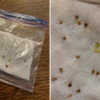
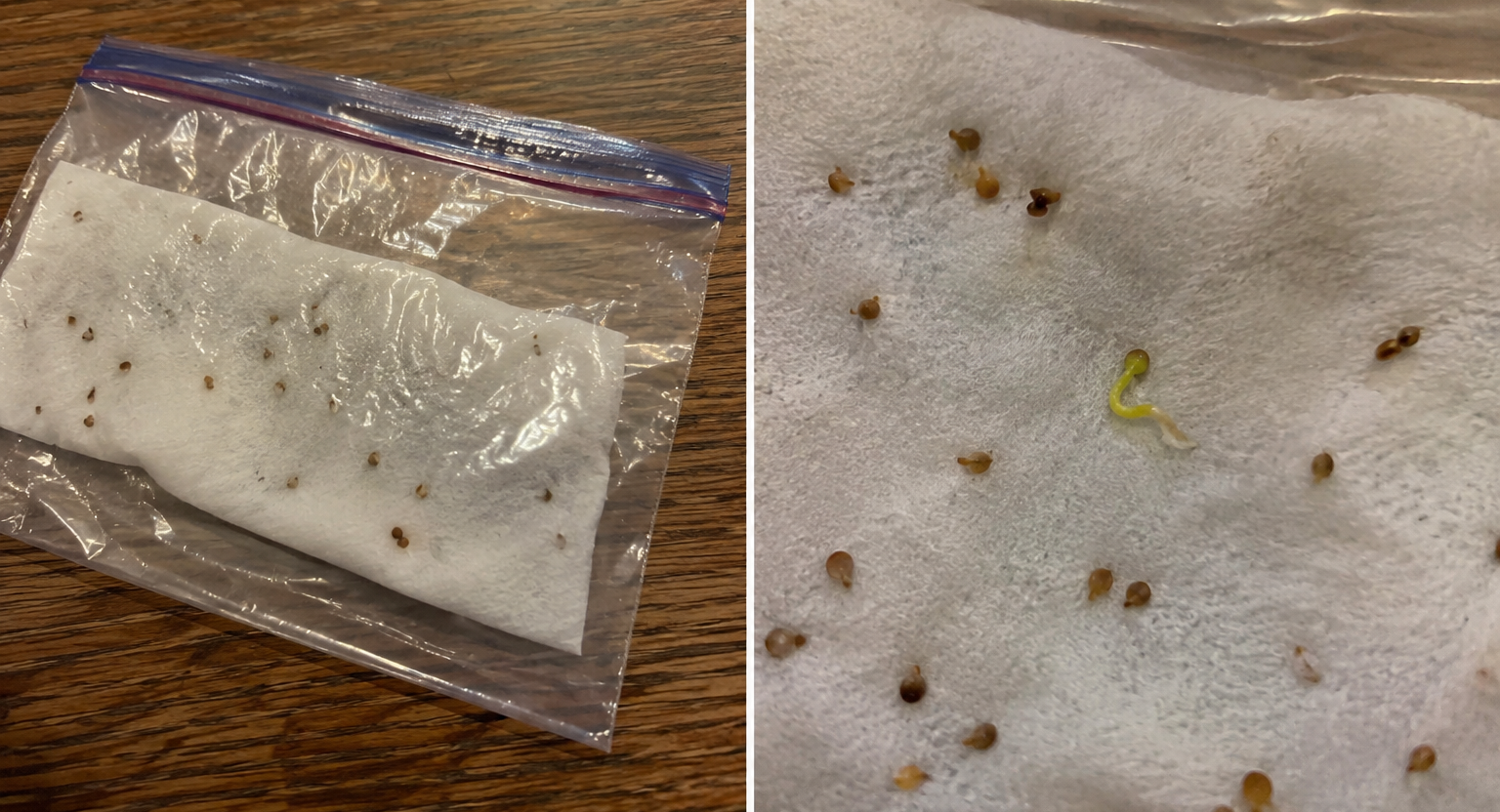
Spread the seeds across the towel, fold it carefully and place it inside a clear resealable plastic bag. Leave some air inside the bag rather than squeezing it completely flat.
Thin paper towels work particularly well because emerging fig roots can become tangled in the fibers of thicker towels.
Provide Warmth and Light
Keep the bag around 75–78°F and provide approximately 14 to 16 hours of light daily.
Check the seeds every couple of days while keeping the towel consistently damp.
The paper-towel method provides excellent control over moisture while keeping the seeds visible. Growers can observe individual seeds and document germination rates, making the method particularly useful for breeding experiments.
Transplant as Soon as the Root Appears
Watch for the first tiny white root, known as the radicle, emerging from the seed.
That’s the time to transplant.
Don’t wait for a long root or green leaves to develop inside the bag. Fig roots are extremely delicate and can quickly attach themselves to paper fibers.
Using fine tweezers, carefully move the germinated seed into a lightweight growing medium without grabbing the root itself.
Coco coir or fine vermiculite can provide an airy environment for newly emerging roots. Keep the seed close to the surface and consistently moist without saturating the container.
The process is straightforward:
24-hour water soak → 2–5 minute peroxide treatment → damp paper towel → warmth and light → transplant immediately after germination
Growing the Next Generation at Bethel Grove
Rooting a cutting produces a genetic copy of an existing fig. Growing from seed creates something different.
Seedlings can potentially produce new combinations of fruit color, flavor, acidity, size, ripening time, productivity, cold tolerance and disease resistance.
Most seedlings won’t become exceptional cultivars. However, growing and evaluating large numbers creates opportunities to discover something genuinely distinctive.
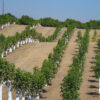
At Bethel Grove Gardens, that’s part of the long-term vision: developing and testing new figs selected for Carolina growing conditions.